

12V vs 240V Heated Towel Rails: How to Choose the Right One for Your Bathroom
If you've started shopping for a heated towel rail, you've probably noticed they come in two different power types: 12 volt and 240 volt. It's one of the most common questions we get asked, and it's an important one to get right before you order — the wrong choice can mean a rail that isn't compliant for where you want to install it, or an unnecessarily complicated wiring job. Here's what the difference actually means for your bathroom.
What is a 12V heated towel rail?
A 12V rail runs on low-voltage power via a small transformer, which is included in the box with every 12V Thermorail rail. Because the voltage is so low, these rails are safe to install close to water — including inside the AS/NZS 3000 wet zones around your shower and bath, where higher-voltage wiring isn't permitted.
This makes 12V rails the go-to choice for single bar rails installed as a set, and for any spot in the bathroom where you want the rail within arm's reach of the shower.
What is a 240V heated towel rail?
A 240V rail runs on standard household power and is hardwired in by a licensed electrician, the same way you'd wire any other fixed appliance. There's no transformer to house, which keeps the installation straightforward, but the wiring rules mean 240V rails generally need to sit outside the bathroom's designated wet zones.
240V is the standard choice for most ladder rails and vertical rails positioned on a dry wall, away from the shower or bath.
Key differences at a glance
| 12V | 240V | |
|---|---|---|
| Power supply | Low-voltage transformer (included) | Standard household wiring |
| Wet zone installation | Yes, compliant with AS/NZS 3000 | Generally no — must sit outside wet zones |
| Typical use | Single bar rails, rails near the shower | Ladder rails, vertical rails on dry walls |
| Installation | Licensed electrician, transformer included | Licensed electrician, hardwired |
So which one should you choose?
It largely comes down to where the rail is going. If you're installing a single bar rail, or positioning any rail within the wet zone around your shower or bath, you'll need 12V. If your rail is going on a dry wall — which is the case for most ladder and vertical rails in a typical bathroom layout — 240V is usually the simpler option.
Either way, it's worth checking your bathroom's wet zone measurements with your electrician or installer before you order, since exact zone boundaries can vary depending on your layout.
Shop the range
Browse our full range by voltage:
A few favourites from each range
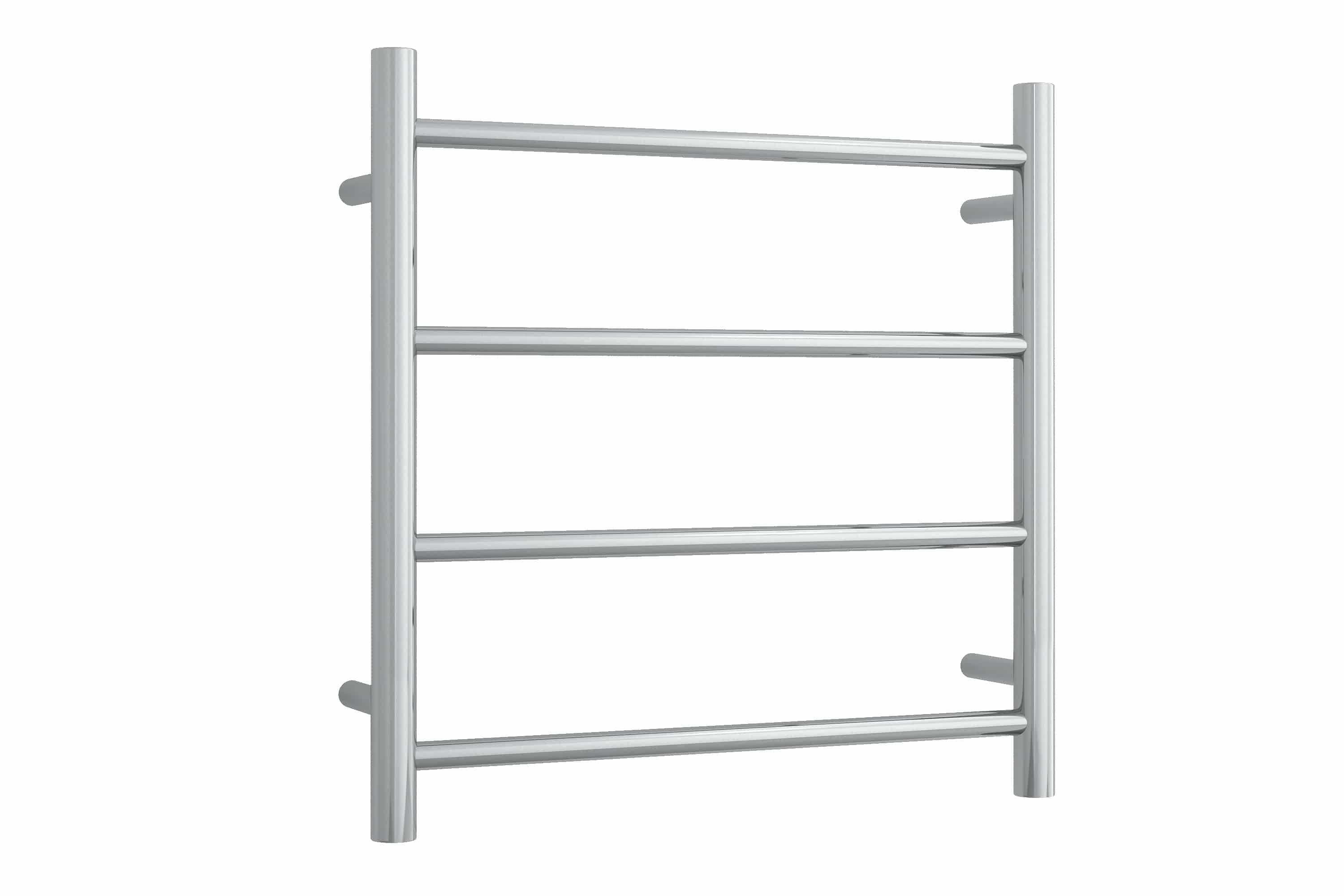
SR2512 — 12V Round Ladder Rail
A compact ladder rail rated for wet zone installation, in Polished Stainless Steel.
View product
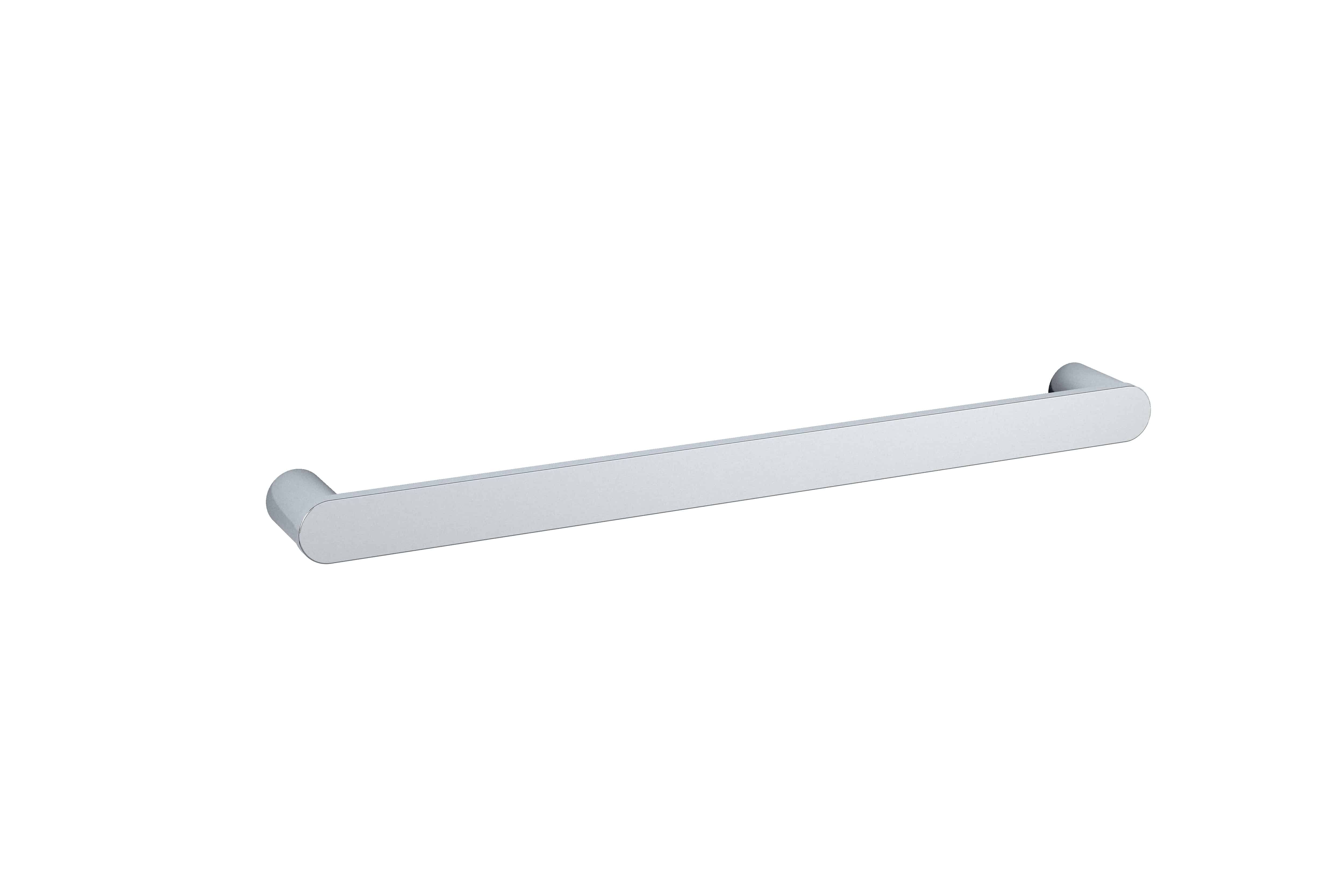
DSP6 — 12V Single Bar Rail
A flat pill profile single bar, designed to be installed as part of a set near the shower.
View product
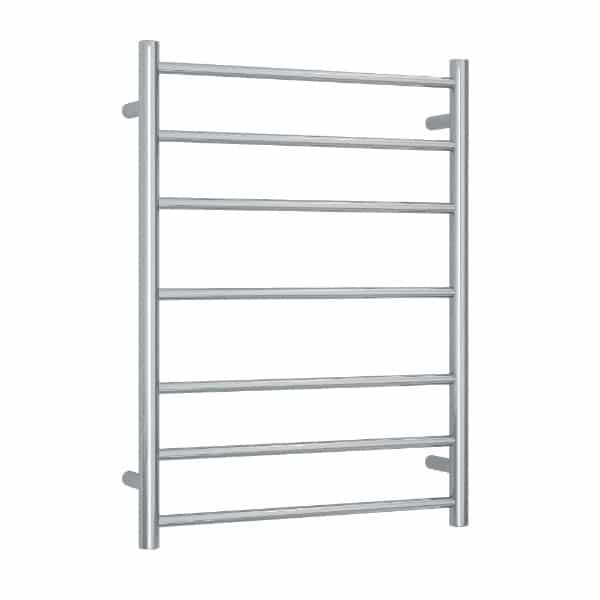
SR44M — 240V Round Ladder Rail
A larger ladder rail for dry wall installation, available in a full range of finishes.
View product
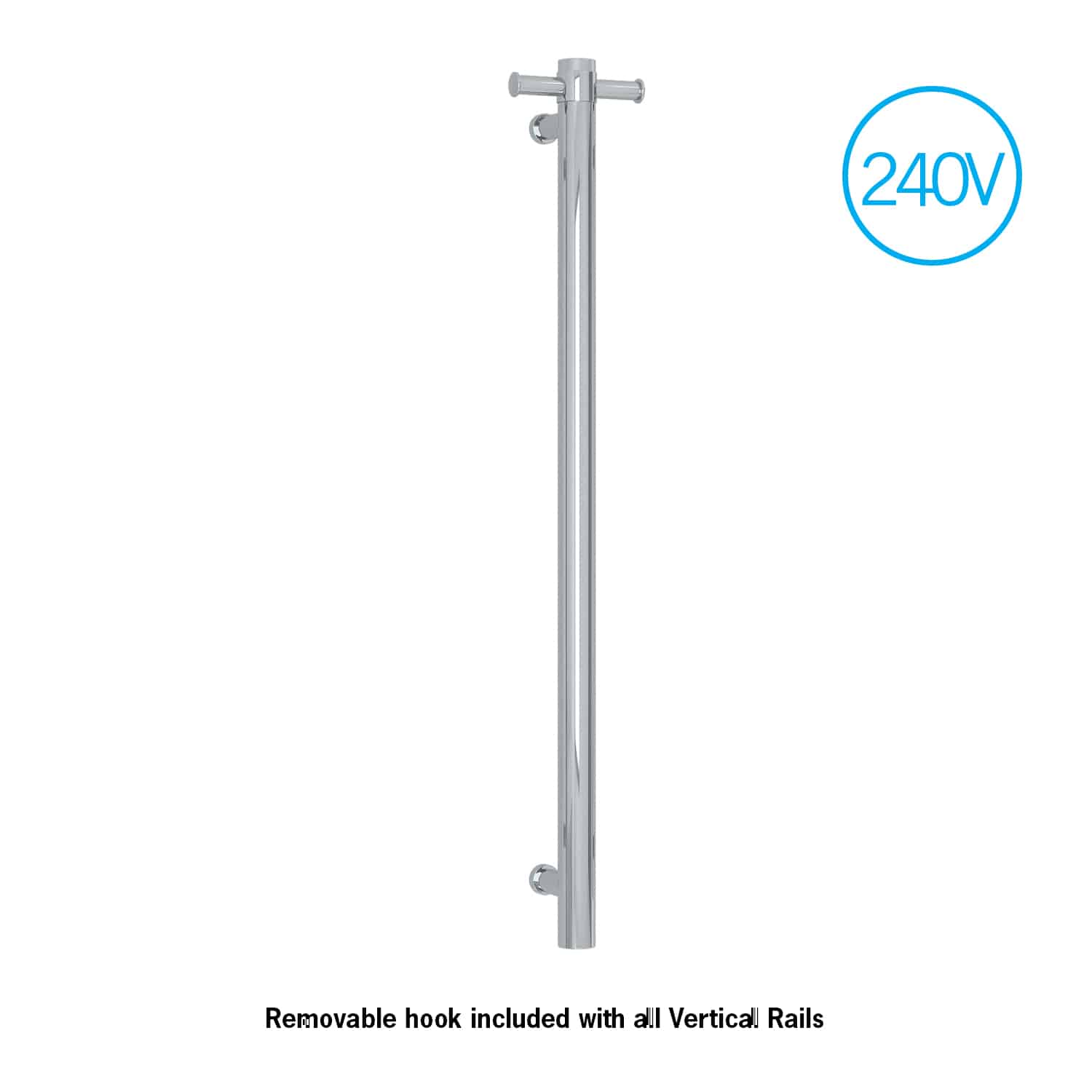
VSH900H — 240V Vertical Rail
A slim vertical rail for narrow wall spaces, wired for standard 240V power.
View product
Still not sure which one suits your bathroom? Our team is happy to help — give us a call or reach out through the site and we'll help you work out the right rail for your layout.


